


Industry Insights
Words of wisdom from our business insurance experts.
Robotics Insurance: When Product Liability and Tech E&O Both Matter
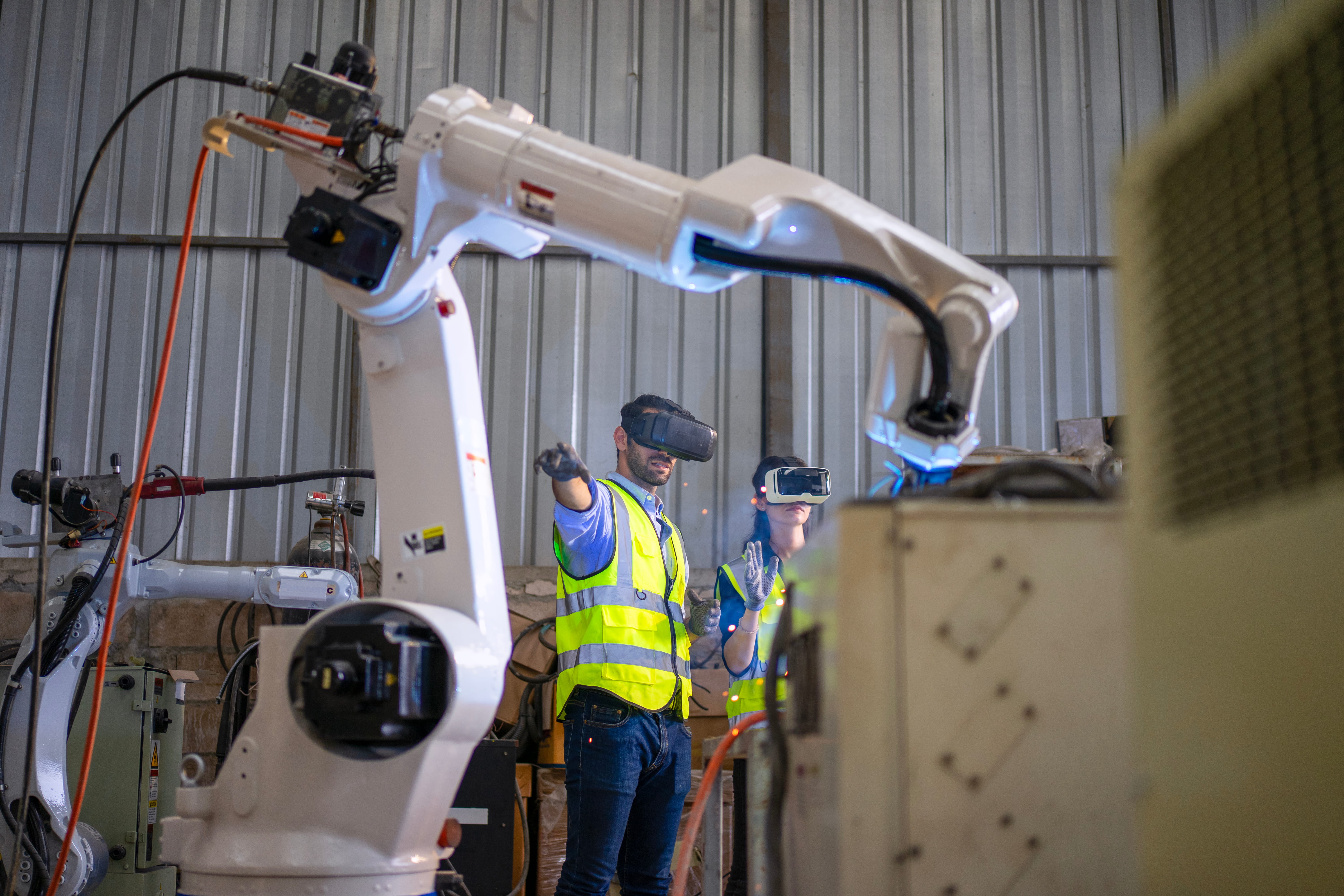
Most software companies never have to think about someone getting hurt by their product. The worst-case failure is a bad output, a downtime bill, an angry customer. For a robotics company, the worst case is different in kind: a line of code that moves a physical machine, and a machine that can hurt a person.
That single fact changes the insurance conversation completely. A robot lives where software meets the physical world — and the moment your product can cause bodily injury or property damage, you've inherited exposures that a standard technology policy was never built to handle. The tricky part is that many founders don't discover the gap until they read the exclusions, or worse, file a claim.
This is one of the most important — and most misunderstood — areas of hardware startup insurance. Here's how the coverage actually fits together.
Quick answer: Robotics companies sit at the seam between two very different kinds of insurance. Technology Errors & Omissions (Tech E&O) generally covers financial loss from software errors, but usually excludes bodily injury and property damage. Commercial general liability (CGL) and product liability are commonly used to address third-party physical harm, though standard forms can contain technology or professional-services exclusions that complicate software-driven claims. A robot whose software causes physical injury can create a coverage dispute or gap if those policies aren't coordinated — which is why a robotics program usually needs both, deliberately aligned so nothing slips through. Exact coverage depends on the policy wording, exclusions, and applicable law.
Let's break down where the exposure comes from, and what a real robotics insurance stack looks like.
Why robotics is different: bits meet atoms
A pure software product fails in software terms. A robotics product fails in physical terms — and that's the whole distinction that reshapes your risk.
When your code controls actuators, motors, blades, wheels, or arms, a bug isn't just a bug. It can become an unexpected movement, a collision, a crush hazard, a fire, or a machine that doesn't stop when it should. The same defect that would be a support ticket in a SaaS product can be a bodily-injury claim in a robot.
Picture an autonomous warehouse robot whose navigation software misjudges a turn and pins a customer's warehouse worker against a shelf. Nobody's data was breached. No customer lost revenue on a dashboard. A person was physically injured — by a machine your software was driving. That's the exposure robotics insurance exists to address, and it's not the kind a standard tech policy answers.
One important wrinkle: who gets hurt changes which policy responds. If the injured person is a third party — a customer's employee, a bystander — that's the domain of CGL and product liability. But if the injured person is your own employee, workers' compensation and employer's liability may be implicated instead, since CGL forms commonly exclude injury to the insured's own employees. It's a distinction worth understanding before an incident forces it.
The insight to internalize: as soon as your product can touch the physical world, "software company" insurance thinking is no longer enough. You need coverage built for atoms, not just bits.
The gap: Tech E&O vs. general and product liability
Here's the seam every robotics founder should understand, because it's exactly where uncovered claims tend to fall.
Two different families of coverage are in play, and they're built around opposite kinds of loss:
Now put them together and you can see the trap. A robot's software fails, and the failure causes physical harm. Is that a technology error (software failure) or a bodily-injury claim (physical harm)? It's genuinely both — and if your Tech E&O excludes bodily injury while your liability policy carries a technology or professional-services exclusion, a poorly coordinated program can leave that exact claim underinsured. (Some technology forms do include limited exceptions or affirmative bodily-injury coverage by endorsement, but you can't assume it — the wording varies by insurer.)
The takeaway isn't that one policy is right and the other wrong. It's that robotics companies generally need both, deliberately coordinated — sometimes through integrated technology-and-product forms designed for exactly this overlap — so a software-driven physical injury doesn't fall between two policies that each assume the other is responsible.
In coverage reviews, this is the pattern that surfaces most often: a robotics company holding a solid Tech E&O policy and a general-liability policy, each quietly assuming the other would answer a software-caused injury — with the ambiguity invisible until someone reads the exclusions side by side. It's usually fixable, but almost always cheaper to fix before a claim than during one.
What insurance does a robotics company need?
A robotics or hardware startup usually grows into a broader stack than a pure software company, precisely because it lives in the physical world. The core pieces:
Two coverages deserve special attention for robotics that don't always for pure software: product liability (because your product is physical and can injure people) and umbrella/excess limits (because a serious bodily-injury claim can dwarf a primary policy's limit). We'll come back to both.
One clarification worth making, because the labels can mislead: for many U.S. robotics companies, product liability isn't a separate policy at all — it's included within a commercial general liability policy's products-completed operations coverage. It can also be placed through a standalone product-liability form or a specialized manufacturer program. The label matters less than confirming the policy affirmatively contemplates your robot, its intended use, its components, and software-driven failure scenarios.
A common way to anchor the early layers is a Business Owners Policy for general liability and property, then build the technology, product, and excess layers on top as your robots move from lab to field.
Robotics company product liability insurance for physical harm
If there's one coverage a robotics company can't treat as optional, it's product liability.
Product liability coverage is generally intended to respond to third-party bodily-injury or property-damage allegations arising from a defective product — your robot, or a component of it — subject to the policy's terms, exclusions, limits, and applicable law. A malfunctioning actuator, a navigation error that leads to a collision, a battery that overheats: these are the kinds of scenarios it's built for, and for a company shipping physical machines into the world, they're not hypothetical.
A few things worth knowing as a robotics founder:
- It typically covers third-party injury and property damage tied to a defect in your product — including manufacturing defects, design defects, and inadequate warnings.
- Limits matter enormously. A single serious injury can generate a claim far larger than what a minimal policy carries, which is why umbrella/excess coverage so often rides alongside it.
- Watch the exclusions. Because robots blend hardware and software, it's worth confirming how your product-liability form treats software-driven failures — and coordinating it with your Tech E&O so a code-caused injury is clearly addressed somewhere.
This is the heart of technology product liability for robots and autonomous systems: the recognition that a modern robot is a product and a piece of software, and the coverage has to account for both natures at once.
Insurance for robotics startups building autonomous hardware
Autonomy raises the stakes again. When a machine makes decisions and moves without a human in the loop, the exposure profile shifts — and a few coverages become more important than they'd be for a tethered or fully-supervised device.
Things to weigh if you're building autonomous hardware:
- Where the robot operates. A device confined to a client's controlled facility is a different risk than one moving through a warehouse full of people, a hospital, or a public sidewalk. Public-space and field operation raise bodily-injury and, sometimes, auto-related exposures.
- Autonomous decision-making. When the machine acts on its own judgment, questions of "what failed and who's responsible" get more complex — another reason to coordinate technology and product coverage rather than rely on one.
- Prototypes and equipment. Early-stage robotics companies carry real value in hardware — prototypes, lab gear, field units. Property or inland marine coverage protects that, including equipment that travels to demos and pilots.
- Recall exposure. If a defect affects an entire fleet, a standard liability policy generally won't pay to recall, retrofit, replace, or withdraw the robots themselves — those first-party costs usually require specialized product-recall or recall-expense coverage, where available and appropriate. Companies with meaningful field deployment should ask about it directly.
- Higher excess limits. Because autonomous machines can cause serious physical harm, umbrella limits that might seem generous for a SaaS company are often just a starting point here.
Structuring coverage for robotics, drones, and artificial intelligence is its own discipline — the layers have to be built around how the machine behaves in the real world, not around a generic software template.
Contract and customer requirements
There's a second reason to sort coverage out early, and it's operational rather than risk-based. Before a pilot or deployment, review the insurance requirements buried in your customer, distributor, landlord, and facility agreements. Robotics companies are frequently asked to carry specific product-liability limits, name customers or partners as additional insureds where appropriate, and provide proof of commercial umbrella coverage. These contract requirements don't replace a genuine coverage review — they're a separate constraint you need to plan for before deployment, not scramble to satisfy the week a pilot is meant to start.
What robotics insurance costs
Robotics insurance pricing varies significantly — more than in most industries — because "robotics" spans everything from a tabletop educational bot to an autonomous surgical system, and the bodily-injury potential drives the premium.
A limited pilot-stage company has a very different insurance profile from a manufacturer running a fleet around workers, patients, vehicles, or the public. Underwriters typically evaluate the robot's function, degree of autonomy, operating environment, deployment scale, safety controls and testing protocols, contractual limit requirements, claims history, revenue, and the limits and deductibles you choose — not revenue alone.
The point is that the risk profile sets the price. Two robotics companies with identical revenue can price very differently if one builds a stationary sorting arm and the other builds an autonomous machine that moves among people. The most useful thing you can do is get an actual quote against your real operating profile, rather than budget from a generic benchmark.
How to check whether your robotics coverage is actually complete
You don't need to be a risk manager to spot the common gaps. Pull your policies and work through this:
- Confirm you carry product liability with adequate limits — not just general liability — given that your product is physical and can injure people.
- Read your Tech E&O for a bodily-injury exclusion (most have one) and confirm where physical-harm claims are actually meant to land.
- Check your general and product liability forms for technology or professional-services exclusions that could complicate a software-driven claim.
- Make sure the two are coordinated so a code-caused physical injury is clearly covered under one policy rather than disputed between two.
- Match your excess/umbrella limits to a realistic worst-case injury — not to what feels normal for a software company.
- Confirm your hardware, prototypes, and field units are insured, including while in transit to demos and pilots.
If any of those raises a question, that's the signal to have a broker who understands robotics review the whole program.
The bottom line
Robotics is one of the few software-adjacent fields where a bug can put someone in the hospital. That reality is what separates hardware startup insurance from the SaaS playbook. A robot is both a product and a piece of software, and its insurance has to cover both — the financial fallout of a software error and the physical harm a machine can cause. The claim that most often falls through the cracks is the one that lives at the seam: a software failure that causes a physical injury.
The fix isn't complicated, but it does require intention — carry product liability with serious limits, coordinate it with your technology coverage, size your excess layers to physical-world risk, and work with someone who has insured robots before. Get that right, and you can build boldly, knowing that if atoms and bits collide, your coverage is ready for it.
Building something that moves in the real world? Tell a Fullsteam advisor what your robot does and where it operates, and we'll map the product, technology, and excess coverage it needs — and flag any exclusions that could leave a software-driven injury uncovered.
Talk to a Fullsteam advisor about your robotics coverage
Frequently asked questions
What insurance does a robotics company need?
Most robotics companies need a coordinated stack: general liability and product liability for bodily injury and property damage, technology E&O for software errors and financial loss, cyber liability for connected devices, commercial property or inland marine for hardware and prototypes, and commercial umbrella for excess limits — plus workers' comp once they hire and D&O if venture-backed. The exact mix depends on what the robot does and where it operates.
Does product liability or Tech E&O cover a robot that physically injures someone?
Physical injury is generally the domain of product and general liability, not Tech E&O — which usually excludes bodily injury and covers financial loss instead. The complication for robotics is when a software error causes the physical harm: that claim can sit at the seam between the two policies. The practical answer is to carry both and coordinate them so a code-caused injury is clearly covered.
Why isn't a standard technology policy enough for a robotics startup?
A standard Tech E&O policy is built for economic loss from software errors and typically excludes bodily injury and property damage — although some technology forms include limited exceptions or affirmative coverage by endorsement. Robots can cause exactly those physical harms, so a technology policy alone usually leaves a major gap. Robotics companies generally need product and general liability for physical harm, coordinated with technology coverage for software failures.
How much does robotics insurance cost?
It varies significantly with the robot's risk profile. A limited pilot-stage company has a very different profile from a manufacturer running a fleet around workers, patients, vehicles, or the public. Underwriters weigh the robot's function, degree of autonomy, operating environment, deployment scale, safety controls, contractual requirements, claims history, revenue, and chosen limits — so the most reliable number comes from an actual quote against your real operating profile, not a generic benchmark.
Do robotics startups need product liability insurance before shipping?
Usually yes. Once a physical product is in customers' hands — or operating near people — the potential for injury or property damage is real, and product liability is the coverage built for it. Many customers and partners also require proof of adequate product-liability limits before they'll deploy your robot, so it's worth arranging before your first units go out.




management specialist