


Industry Insights
Words of wisdom from our business insurance experts.
Commercial Drone Insurance: Liability, Hull, and Payload Coverage
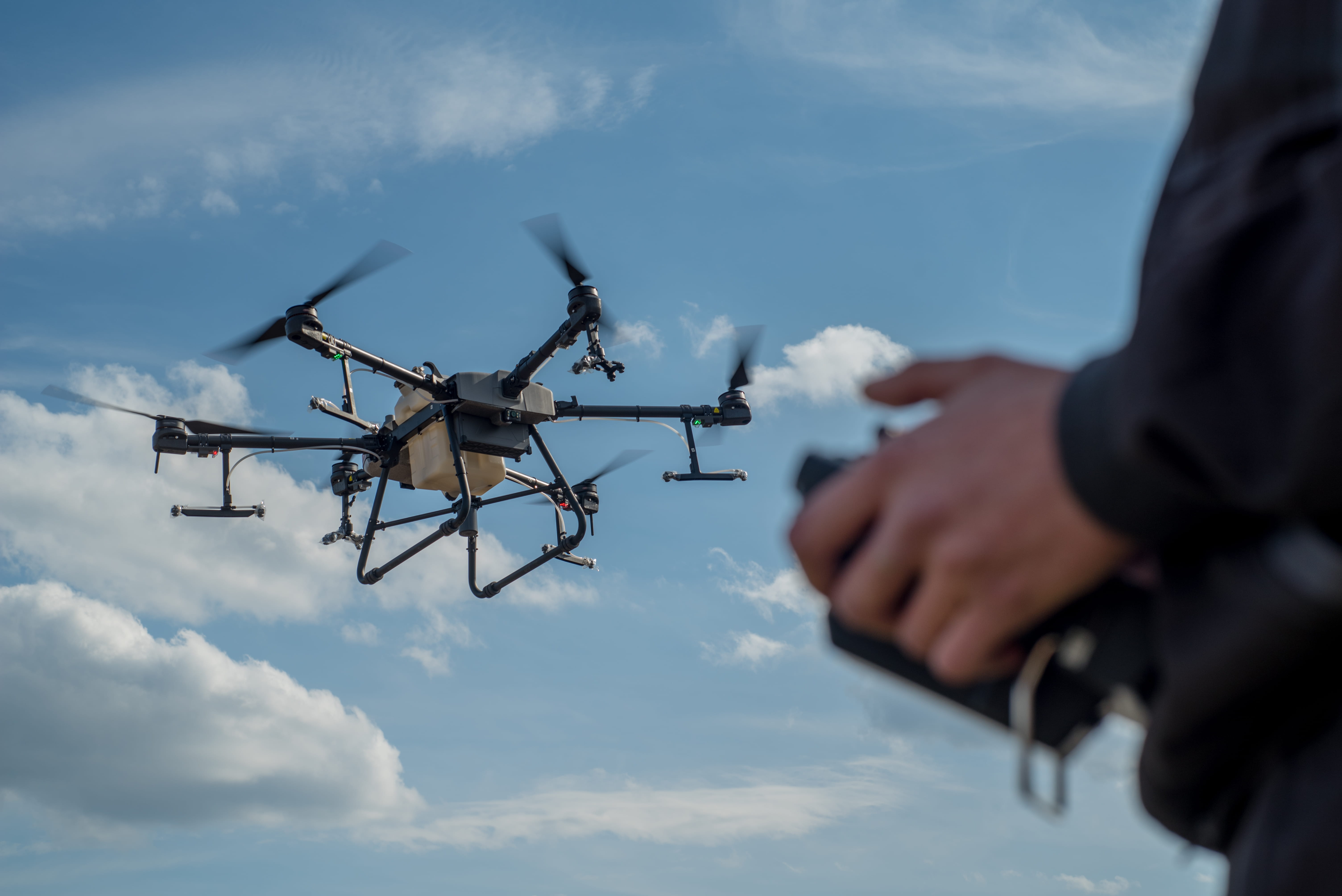
You passed your Part 107. Part 107 is the FAA's rulebook for most commercial small-drone operations in the United States. It sets the certification and operating requirements for pilots flying drones for business purposes. You've got a capable aircraft, a paying client, and a job on the calendar. There's just one thing a lot of newly commercial drone operators underestimate until a client asks for it — or until something goes wrong: insurance.
Drone insurance isn't just "business insurance with a drone attached." It sits in the world of aviation, which comes with its own coverage types, its own vocabulary, and its own gaps. And the gaps are where operators get hurt — most commonly the camera, sensor, or LiDAR system mounted to the aircraft, which a surprising number of policies don't automatically cover.
Whether you're flying inspections, mapping a site, shooting cinema, or collecting LiDAR, here's what commercial drone insurance for business operators actually covers, where the gaps hide, and what to confirm before your next flight.
Quick answer: Commercial drone insurance is built on three core pieces: liability (third-party bodily injury and property damage, with $1 million commonly used as a starting contractual limit), hull (physical damage to the drone itself), and payload (the cameras, sensors, and LiDAR mounted to it — which is frequently not included automatically). The FAA doesn't currently require Part 107 operators to carry insurance, but clients, venues, and job sites very often do. Operators who deliver data also frequently need professional liability, plus the ability to produce certificates of insurance fast. Exact coverage depends on your policy.
One clarification up front: the FAA does not currently impose a federal insurance requirement for Part 107 operations. In practice, though, many commercial clients, venues, construction sites, and enterprise partners require proof of liability coverage — usually a certificate of insurance (COI) — before a flight can take place. So the pressure to carry coverage is real; it just comes from your contracts and clients, not from the FAA. Let's break down what that coverage actually looks like.
Why drone insurance is its own category
A drone is an aircraft in the eyes of the FAA, and that framing matters more than it first appears. Many commercial small-UAS operations run under Part 107, though some use a Part 107 waiver, another FAA authority, or a different framework depending on the mission. Under Part 107, the remote pilot in command is responsible for the operation's regulatory compliance and operational safety. Separate civil liability for damage the drone causes is a different question — it depends on the facts, your contracts, your insurance, and applicable federal or state law. Either way, "I have general business insurance" often isn't the answer a client—or a claim—is looking for.
Because it's aviation, drone coverage is written and priced differently from ordinary commercial policies, and it's usually placed through the specialized unmanned aviation market rather than a standard business carrier. The upside is that this market understands drones; the catch is that the coverage has moving parts — liability, hull, and payload — that don't all come bundled by default.
The single most common surprise we see: an operator assumes the $8,000 LiDAR unit under their drone is covered because the drone is. It often isn't. Hull and payload are frequently separate decisions, and a policy can cover the aircraft while leaving the most expensive thing on it exposed.
The three core coverages: liability, hull, and payload
Most commercial drone programs are built around three pieces. Understanding what each does — and doesn't — is the whole game.
Here's the mental model: liability protects other people and their property, hull protects the aircraft, and payload protects the equipment riding on it. They're three separate questions, and the mistake is assuming one answers the others.
Aviation liability
This is often the first coverage clients ask about. Aviation liability responds to third-party bodily injury and property damage your drone causes — a crash into a car, a person, a building. It's worth being clear that this is a market practice, not an FAA insurance minimum: $1 million per occurrence is a common starting contractual limit, and many clients — especially in construction, utilities, or events — may require $2 million or more before you fly on their site. The right number depends on the client, the site, the operation, and the contract.
Hull
Hull coverage may pay for physical loss or damage to the drone itself — such as crash damage, theft, or a flyaway — subject to the policy's terms, deductibles, exclusions, and how the aircraft is valued. For lower-value aircraft, some operators choose to self-insure the drone rather than buy hull coverage. That decision should account for the aircraft's replacement cost, the deductible, any attached payload, contractual requirements, and the operational cost of downtime — a cheap drone can still carry an expensive sensor or be the thing standing between you and a completed job.
Payload
Payload coverage is the one operators miss most, so it gets its own section below.
Payload insurance for commercial drone operators
If you take one thing from this article, make it this: the sensor is not the same as the drone, and it's often not automatically insured with it.
Payload — your cinema camera, thermal imager, multispectral sensor, or LiDAR unit — is frequently not included under hull coverage by default. And for many commercial operators, the payload is the single most valuable and most exposed piece of equipment on the aircraft. A LiDAR unit or a cinema-grade camera can be worth more than the drone carrying it, so a policy that covers the aircraft but not the payload can leave your biggest asset uninsured in a crash.
The fix is simple once you know to ask: confirm, in writing, whether your policy includes payload — and if it does, at what value. Don't assume. Match the insured payload value to what you actually fly with, and update it when you upgrade sensors. This is exactly the kind of detail a broker who understands drone operations checks as a matter of course.
Drone insurance for LiDAR and geospatial companies
For LiDAR, mapping, surveying, and geospatial operators, the coverage conversation goes one layer deeper — because you're not just flying an aircraft, you're delivering data, and the data itself carries exposure.
Two things stand out for this group:
- High-value payload. LiDAR and survey-grade sensors are expensive, which makes confirmed payload coverage (at the right value) non-negotiable rather than optional.
- Professional liability for the deliverable. If a client relies on your point cloud, orthomosaic, or survey data and it turns out to be wrong — a measurement error, a processing mistake — that's a professional exposure, not an aviation one. Errors and Omissions (E&O) professional liability insurance is commonly intended to address allegations that your data, analysis, or professional deliverable was inaccurate, incomplete, or negligently performed — subject to the policy's terms and exclusions — rather than a physical crash.
That combination — aviation liability and hull for the flight, confirmed payload for the sensor, and E&O for the data — is what a complete program looks like for a geospatial or LiDAR operator. Missing any one leaves a real gap.
Flying a high-value sensor or delivering survey-grade data? It's worth asking for a review of your payload schedule and E&O scope before your next deployment — the two coverages most likely to be misaligned for geospatial work.
Beyond the big three: what else operators carry
Depending on your work, a few more coverages round out a commercial drone program:
- Professional liability (E&O) — for operators whose deliverable is data or analysis (mapping, inspection reports, surveys), covering claims that the work was wrong or incomplete.
- Privacy, cyber, and data exposures — see the dedicated section below; this is significant enough for imaging and geospatial operators to treat separately.
- Non-owned / rented drone coverage — if you fly aircraft you don't own, or bring in subcontractor pilots.
- Ground equipment — controllers, laptops, batteries, and gear that isn't strapped to the aircraft.
- General liability — for the non-flying side of your business: premises, operations, and the exposures a purely aviation policy may not touch.
Not every operator needs all of these, but a quick review against how you actually work tends to surface at least one gap worth closing.
Aviation liability doesn't automatically cover your data
For mapping, inspection, security, and LiDAR businesses, this deserves its own flag: an aviation-liability policy is built around the aircraft and the physical harm it can cause — not the data you collect with it.
Coverage for privacy, cyber, regulatory matters, and data loss varies significantly, and a drone liability policy shouldn't be assumed to cover a client-data breach, the unlawful capture or storage of personal information, or data-processing liability. If you collect, store, process, or transmit client data — imagery, point clouds, site records, security footage — review cyber and privacy coverage separately. The flight and the data it produces are two different exposures, and one policy may not address both adequately.
What drone insurance usually does not cover
No policy covers everything, and exclusions vary by insurer and form — but a few things are commonly outside standard drone coverage, and it's better to know them now than at claim time. As illustrative examples only:
- Intentional or illegal operations — flying outside your authorizations, or knowingly unsafe conduct.
- Regulatory fines and penalties — these are frequently excluded or limited.
- Wear and tear, maintenance, or mechanical breakdown — routine deterioration isn't a covered peril.
- Unscheduled high-value payloads — a sensor that isn't listed or valued on the policy may not be covered.
- Lost income from a grounded job — unless a coverage that specifically addresses it is in place.
- Data breach, privacy, or professional-data errors — unless separately covered (see above).
Treat this as a prompt to ask, not a definitive list — the only way to know how your policy treats any of these is to read the form and confirm with your broker.
Part 107, clients, and certificates of insurance
Two operational realities shape a commercial drone program as much as the risk itself.
First, Part 107 places operational responsibility on the pilot. The remote pilot in command is responsible for complying with the rules and operating safely — including specific reporting duties. The FAA requires the remote pilot to report certain incidents to the agency within 10 days, such as an operation that results in serious injury, loss of consciousness, or at least $500 of property damage (to property other than the drone). That's a compliance obligation, separate from whether insurance responds — which is a good reminder that insurance doesn't replace FAA compliance. You still need the proper remote-pilot credential (or to fly under qualified supervision) and to meet your operational and reporting duties, regardless of what your policy covers.
Second, clients will ask for proof. Commercial drone work runs on certificates of insurance. A property manager, film production, construction GC, or utility will frequently require a COI — often naming them as an additional insured, at a specified limit — before you're allowed on site. Fast, accurate certificate turnaround is a genuine competitive advantage for a working operator, so it's worth asking any broker how quickly they can issue one. If your coverage can't produce a COI when a job needs it, that job can slip.
One important nuance here: a certificate of insurance is evidence of coverage; it doesn't by itself amend the policy. If a client requires additional-insured status, confirm that the policy and the required endorsement — not just the certificate — actually provide it. Writing "additional insured" on a COI does not make anyone one. And whether additional-insured status is even available — and how much protection it provides — depends on the policy form and the specific endorsement issued for that client. It isn't automatic on every aviation policy or appropriate for every relationship.
This is also where flexibility matters: some operators carry an annual policy, while others use on-demand or per-flight coverage for occasional jobs. The right structure depends on how often you fly and what your clients require.
What commercial drone insurance costs
Pricing varies with the work, so treat any single number with caution. The drivers that move a drone premium include:
- Liability limits — $1M vs. $2M+ changes the price, and clients often dictate the floor.
- Hull and payload values — insuring a $3,000 drone with a $2,000 camera is very different from a $15,000 aircraft carrying a $30,000 LiDAR unit.
- Type of operation — inspections, mapping, agriculture, cinema, and BVLOS work carry different risk profiles.
- Where and how you fly — over people, near infrastructure, in congested airspace, or beyond visual line of sight all factor in.
- Experience and claims history — like any aviation coverage.
The most reliable way to budget is a quote against your actual equipment, limits, and operations — not a generic benchmark, because two operators with the same drone can price very differently based on what they fly and where.
How to check your coverage before your next flight
A quick pre-flight check on the insurance side, not just the aircraft:
- Confirm your liability limit meets your client's requirement — and that you can name them as an additional insured if the contract asks.
- Check whether payload is covered, and at what value — this is the gap that catches operators most.
- Confirm hull coverage matches your aircraft's replacement cost, if you carry it.
- If you deliver data, confirm you have professional liability / E&O for errors in the deliverable.
- Make sure you can generate a COI quickly for the jobs that require one.
- Review privacy, non-owned, and ground-equipment coverage against how you actually operate.
If any of those raises a question, that's the moment to talk to a broker who works in unmanned aviation — before the flight, not after the claim.
Before you request a quote
The more precisely you can describe your operation, the more accurate a quote you'll get — and the fewer surprises later. Have these ready:
- Drone make, model, and replacement value.
- Camera, sensor, or LiDAR type and replacement value — for each piece of payload you fly.
- Your planned work — inspections, mapping, media, agriculture, surveying, security, and so on.
- Where you fly — controlled client sites, near infrastructure, over people, or in public areas.
- Annual flight volume and revenue.
- Client insurance requirements — requested liability limits and any additional-insured language.
- Claims history and current coverage — what you've had, and any losses.
Pulling this together before you reach out tends to turn a vague quote into a specific one — and helps a broker spot gaps you might not have flagged yourself.
The bottom line
Commercial drone insurance rewards operators who understand that it's aviation, not ordinary business coverage — and that its three core pieces answer three different questions. Liability protects other people, hull protects the aircraft, and payload protects the expensive sensor riding on it — and payload is the one that's most often left out. Add professional liability if you deliver data, keep your limits aligned with what clients require, and make sure you can produce a certificate of insurance fast.
Get that right and insurance stops being the thing that grounds a job. It becomes what lets you say yes to the next one, confident that if a flight goes wrong, your aircraft, your payload, and the people below are all accounted for.
Flying commercially — or about to? Tell a Fullsteam advisor what you fly, what you carry, and what your clients require, and we'll review your aircraft, payload, operations, client requirements, and existing policies to identify coverage questions and potential gaps before your next flight.
Frequently asked questions
What insurance do commercial drone operators need?
Most commercial drone operators need aviation liability (third-party bodily injury and property damage, commonly $1 million or more), and often hull coverage for the drone and payload coverage for mounted cameras or sensors. Operators who deliver data — mapping, surveying, inspections — frequently add professional liability / E&O, and many need the ability to produce a certificate of insurance for clients. The right mix depends on what you fly and the work you do.
Does drone insurance cover my camera or LiDAR sensor?
Not automatically. Payload — cameras, thermal imagers, LiDAR, and other mounted equipment — is frequently not included under hull coverage by default and often has to be added or confirmed separately. Because a sensor can be worth more than the drone carrying it, operators should verify in writing whether payload is covered and at what value.
What's the difference between hull and liability coverage for drones?
Hull coverage pays for physical damage to the drone itself — a crash, flyaway, or theft. Liability coverage pays for third-party bodily injury or property damage the drone causes to others. They protect different things: hull protects your aircraft, liability protects other people and their property. Payload coverage, for the sensor on the drone, is typically a separate item again.
How much liability insurance do commercial drone operators need?
There's no FAA insurance minimum for Part 107 operations, so the requirement usually comes from your clients. As a market practice, $1 million per occurrence is a common starting contractual limit, and many clients — especially in construction, utilities, and events — may require $2 million or more and ask to be named as an additional insured before you fly on their site. The right limit is often set by your contracts as much as by your own risk tolerance.
Do LiDAR and geospatial drone companies need special insurance?
LiDAR and geospatial operators should evaluate confirmed payload coverage at the right value (the sensors are expensive) and professional liability (E&O) coverage — particularly when clients rely on their survey, mapping, inspection, or analytical deliverables. A crash is an aviation claim; a faulty survey or point cloud is a professional-liability claim, and a complete program considers both. The exact needs depend on the operation and the contracts.
Editorial and insurance disclosure
This article is for educational information — not legal, regulatory, or insurance advice — and it doesn't create a client relationship or guarantee any particular coverage outcome. Coverage depends on the specific policy, its terms and exclusions, and applicable law, and FAA rules and waiver pathways can change over time. For advice specific to your operation, speak with a licensed advisor.
Last reviewed: August 2026.




management specialist