


Industry Insights
Words of wisdom from our business insurance experts.
Data Center Insurance: Coverage, Cost and Capacity in 2026
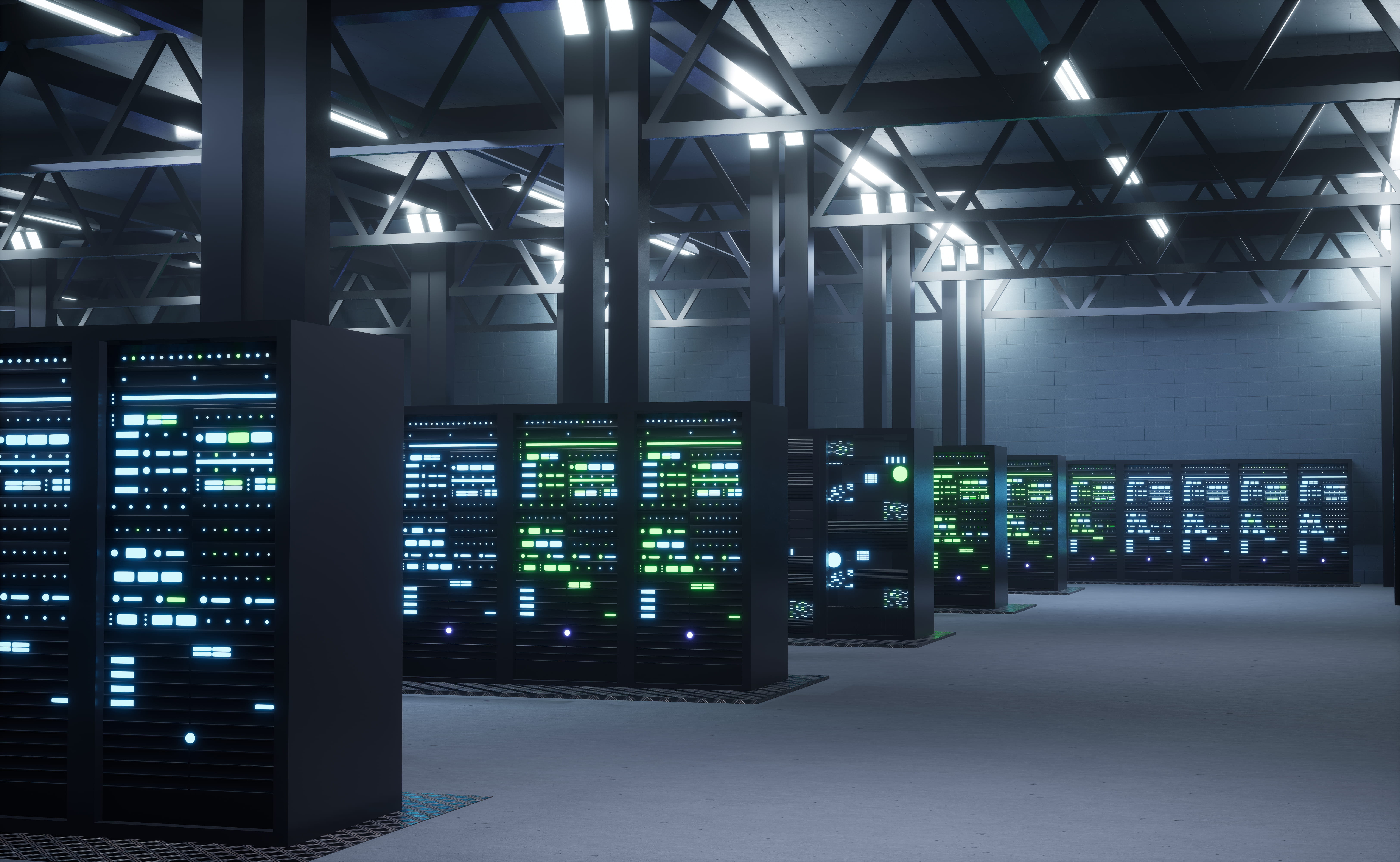
Data center insurance is a coordinated program of property, liability, and specialty coverages that protects the physical facility, its critical equipment, the data and uptime it delivers, and the third parties who depend on it. Because a single campus can be worth tens of billions of dollars, it is layered across many carriers rather than
written on one policy.
That definition sounds simple. In practice, insuring a data center in 2026 is one of the hardest placements in the entire commercial market — not because the risks are exotic, but because the scale has outrun what the insurance industry can comfortably absorb. A hyperscale campus can cost more to build than a mid-sized insurer's entire annual capacity. That single fact reshapes everything: what you can buy, what it costs, and how many carriers it takes to get there.
This guide walks through the full picture of data center insurance coverage: what a program actually needs, why standard property forms fall short, what drives the cost, and the capacity ceiling that means even a well-funded operator may not be able to buy full limits. Whether you own facilities, develop them, or rent racks as a colocation tenant, the goal is the same — understand the program before you need it. Good insurance for data centers isn't bought off a shelf; it's built.
Who this guide is for: operators and owners insuring the facility itself; developers building new sites; and colocation tenants placing their own hardware and data inside someone else's building. Each has a different program and different gaps, and we flag which is which throughout.
A quick definition, since the term shows up repeatedly below: a hyperscale data center is a very large facility — often hundreds of thousands of square feet and hundreds of megawatts of power — built to run the massive, elastic computing workloads of cloud and AI providers. These are the campuses whose values run into the tens of billions of dollars and sit at the center of the capacity problem this article describes.
What data center insurance is — and what it isn't
A data center is a deceptively simple building full of extraordinarily concentrated value. The structure itself is often the least of it; the money sits in the power and cooling infrastructure, the servers and networking gear, the data flowing through them, and the contractual promises of uptime made to the customers who depend on the facility.
Data center insurance is not a single policy. It's a program — a stack of coordinated coverages, often placed across dozens of carriers, that together protect the property, the equipment, the operations, the data, and the liability exposures a facility carries. Calling it "property insurance" is like calling a hospital "a building with beds." Technically true, badly incomplete.
It also isn't the same thing as the coverage your tenants or customers need. An operator insures the facility and its own operations; a colocation tenant insures the hardware and data they place inside someone else's building. Those are different programs with different gaps — we'll get to who buys what later on.
The through-line: a data center program has to answer several very different questions at once. What happens if the building burns, floods, or loses power? What happens if a chiller fails and cooks a hall of servers? What happens if a customer's data is breached, or the facility goes dark and a client misses their service-level agreement (SLA)? A serious program addresses all of them — and no off-the-shelf form does.
The eight coverage lines a data center program actually needs
Most complete data center programs are built from eight coverage lines. Not every facility carries all eight at full strength, and the exact structure depends on whether you own, operate, develop, or tenant — but this is the map. (Coverage always depends on the specific policy wording, exclusions, and limits.)
Here's what each line is really doing.
Property and time element
The foundation. Property coverage responds to physical loss or damage to the facility — the shell, the power distribution, the cooling plant, and (depending on how the policy is written) the IT equipment inside. The "time element" half is often the more valuable piece: business interruption (BI) and extra expense, which replace the income lost and the added costs incurred when the facility can't operate. For a data center, downtime is the loss. A building can be structurally fine and still cost enormous sums if it isn't delivering. Time-element coverage is where a program lives or dies, and it's also where the wording gets most technical — how "period of restoration" and "waiting period" are defined can change a claim by an order of magnitude. A commercial property policy built for a warehouse may not adequately address any of this without heavy customization.
One important caveat on the time-element side: data center business-interruption coverage should be reviewed alongside your SLA obligations, because they don't automatically line up. Standard time-element coverage generally reimburses the insured's lost income and extra expense after covered physical damage — but service credits, liquidated damages, contractual penalties, reputational loss, and a customer's own lossesmay be excluded or require separate coverage, even when an outage causes substantial economic harm. The gap between "our lost revenue" and "what we owe our customers under contract" is one to map deliberately.
Equipment breakdown
Ask an operator what actually takes a facility down, and the honest answer is rarely a fire. It's a transformer, a chiller, a UPS (uninterruptible power supply), a piece of switchgear — mechanical and electrical systems failing suddenly. Standard property policies may not provide the same scope of protection for internal mechanical or electrical breakdown as a dedicated equipment-breakdown form. Equipment breakdown coverage (historically "boiler and machinery") is designed to cover the sudden and accidental failure of critical systems, plus the downtime that follows. The practical step is to review whether failure of transformers, UPS systems, switchgear, generators, and cooling equipment is affirmatively covered, and how the resulting business interruption is treated — for a facility whose entire value proposition is keeping servers powered and cool, that answer matters more than almost any other line.
Cyber and technology E&O
A data center is a vault of other people's data. Cyber coverage is generally designed to respond to breaches, ransomware, and network security failures — split between first-party incident expenses (forensics, notification, restoration) and third-party liability (claims from those affected) — while Technology Errors & Omissions (Tech E&O) responds when the service fails to perform as promised and a customer suffers financial loss. Which layer answers, and to what extent, is subject to policy terms, sublimits, exclusions, and the facts of the event. The two overlap and are often coordinated. Given the volume of third-party data and the contractual promises attached to it, a facility that treats cyber liability and Tech E&O as afterthoughts is carrying a large potential exposure.
General and excess liability
General liability covers third-party bodily injury and property damage — the contractors, vendors, and visitors moving through a large, active site. On its own, a primary limit is nowhere near enough for a facility of this value, which is why it's layered with commercial umbrella and excess liability — additional limits stacked on top of the primary policies to reach the totals a hyperscale operation actually needs.
Professional liability
Where a facility provides professional services — design, engineering, managed operations, consulting — professional liability responds to claims that those services were performed negligently and caused a client financial harm. For operators and developers whose decisions shape whether a client's infrastructure performs, this is a real and distinct exposure from the physical and cyber lines.
Environmental
Data centers store things that leak. Diesel for backup generators, refrigerants for cooling, and increasingly large battery systems for energy storage all carry pollution and environmental exposure. General liability and property policies often contain pollution exclusions or provide only limited pollution coverage, so operators with diesel, refrigerants, battery systems, and other potential contaminants should review environmental impairment / pollution liability coverage separately. It addresses cleanup and third-party pollution claims — an exposure that grows with on-site fuel and battery storage.
Project cargo and construction
A data center doesn't spring into existence. The build phase — often multiple years — carries its own exposures: builder's risk for the works under construction, and project (marine) cargo for the long-lead, high-value equipment shipped from around the world before it's installed. Transformers and switchgear can carry delivery lead times measured in years; damage or delay in transit is its own category of loss. The construction phase is also where much of the recent industry alarm about uninsured value is concentrated, because project values have grown faster than available capacity.
Parametric downtime
The newest tool in the kit. Parametric coverage pays a pre-agreed amount when a defined, measurable event occurs — for example, a power outage above a set duration measured by an independent source — without the insured having to prove the dollar value of the physical loss. For data centers, parametric structures are being used to fill gaps left by scarce traditional capacity, to speed up recovery, and to cover downtime scenarios that conventional business interruption handles slowly or not at all. One limitation to understand: because payment is based on the agreed trigger rather than a traditional adjustment of the actual loss, a parametric payout may end up more or less than your eventual economic loss. Its value is speed and certainty — not a full replacement for conventional property and business-interruption insurance. It supplements the program at the top of the tower; it doesn't stand in for it.
Why standard commercial property forms fail on a data center
If you handed a data center to a standard commercial property policy, it would fail in at least four predictable ways.
First, the value concentration breaks the model. Ordinary property forms and the carriers behind them aren't built to absorb a single insured location worth tens of billions of dollars. The limits simply aren't there on one policy, which forces the layered, multi-carrier structure we'll cover next.
Second, equipment breakdown may not be fully addressed. As noted above, the failures most likely to take a facility down — mechanical and electrical breakdown — are exactly the perils standard property forms may limit or carve out. Without a dedicated equipment breakdown line, the most probable loss can be the least covered.
Third, the time-element wording doesn't fit uptime economics. Standard business interruption is written around a manufacturer or retailer that loses sales for a period and resumes. A data center's losses are governed by SLAs, contractual penalties, and the near-instant revenue impact of downtime. "Period of restoration" and valuation clauses written for a warehouse understate the exposure badly.
Fourth, the specialty exposures generally aren't contemplated. Pollution from fuel and batteries, professional liability from design and operations, cyber and Tech E&O from the data itself, project cargo for the build — these typically don't live in a standard property form. Each has to be added deliberately, and the gaps between them are where uninsured losses hide.
The takeaway isn't that standard forms are bad. It's that a data center is not a standard risk, and treating it like one is how a facility ends up thinking it's covered when it isn't.
What a data center insurance program costs — and what drives the number
There is no honest single number for what data center insurance costs, and any source that gives you one is guessing. Pricing is a function of the facility, the market, and the structure of the deal. What's more useful is understanding the levers.
The biggest drivers of a data center's premium:
- Total insurable value. The single largest input. A facility's replacement cost — building, power, cooling, equipment — sets the base against which almost everything else is measured.
- Limits purchased and capacity consumed. How much total limit you're buying, and how much scarce market capacity that consumes, moves the number more than almost anything else in 2026 (more on capacity below).
- Business interruption values and SLA exposure. The income at risk and the contractual penalties tied to downtime. A facility with aggressive uptime commitments carries more time-element exposure.
- Construction, redundancy, and risk controls. Tier rating, fire suppression, power and cooling redundancy (N+1, 2N), and physical security. Well-engineered, redundant facilities present better and price better.
- Location and natural-catastrophe exposure. Wildfire, flood, wind, and seismic exposure at the site — and the accumulation risk of clustering many facilities in one region.
- Cyber and data-handling posture. Security controls, governance, and the sensitivity of the data held drive the cyber and Tech E&O layers.
- Claims history and operator track record. As with any complex risk, experience and loss history matter to underwriters.
The market backdrop matters too, and it's genuinely strange right now. Broker market indices — including Marsh's Global Insurance Market Index — have reported U.S. commercial property rates softening through 2025 and into 2026, even as capacity for the largest data centers stays scarce (Marsh, Global Insurance Market Index). That tension is the defining feature of the moment: the broad property market is soft, but the specific capacity a large data center needs is hard to find. Note that rate movements vary by region, occupancy, construction, and catastrophe exposure, so a general "rates are down" headline can be true and largely irrelevant to a hyperscale placement at the same time.
The capacity problem: why you may not be able to buy full limits
This is the part that surprises people new to the sector, and it's the real thesis of 2026: for the largest data centers, the constraint isn't price — it's availability. For flagship hyperscale projects, you may not be able to buy insurance to the full value of the asset at any reasonable cost, because sufficient capacity may not exist in the market.
A note on the figures below: these are market observations reported by the named sources at the time of writing. Carrier appetite, per-project capacity, placed limits, and project values all move — sometimes quickly — so treat them as a snapshot of the 2026 market, not permanent rules.
Why multi-carrier towers are necessary
The scale of demand explains the shortage. According to Swiss Re Institute analysis, global data center insurance premiums are projected to roughly double from about $10.6 billion to $24.2 billion by 2030, against a global insurable asset base — across roughly 11,000 facilities — of more than $2 trillion (Swiss Re Institute, via Intelligent Insurer). Demand is expanding fast; supply is not keeping pace.
At the individual-project level, the mismatch is stark. Industry reporting has put typical placed limits in the range of $1.5–3.5 billion, against project values that increasingly run $10–30 billion, with placements above roughly $5 billion described as rare (Engineering News-Record, citing Marsh and S&P). Zurich North America has been quoted putting the average insured project value at around $3 billion today, up from roughly $150 million five years ago (Risk & Insurance). The projects grew an order of magnitude; the market didn't.
The reason is structural. A single reinsurer's net capacity for one data center project is limited — Munich Re has described offering on the order of $250 million per project (Munich Re). Do the arithmetic: covering $10 billion on one site can mean stacking a tower across 40 or more carriers, each taking a slice. Assembling that tower is slow, expensive, and — at the very top end — sometimes not possible. Aon has reported expanding a dedicated data center program to about $3.5 billion in capacity in 2026 (Insurance Business); even that headline figure sits well below the cost of a flagship hyperscale campus.
What operators do when full limits are unavailable
When the market can't supply cover to full value, the answer is structure. In practice, for an operator or developer that means:
- Full-value cover may not be achievable for the largest projects; some portion of the asset is effectively self-insured or financed differently.
- Lenders and full cover can collide. Financing institutions often press for limits covering the full construction cost — limits the market can't always supply — which becomes a live negotiation.
- Structure and lead time become everything. Assembling a 40-carrier tower isn't a last-minute task. The earlier and more precisely a program is built, the better the outcome.
- Alternatives fill the gap. Parametric structures, captives, and creative layering are increasingly used to bridge what traditional capacity can't reach.
This is also where an experienced data center insurance broker earns their fee. A placement that spans dozens of carriers, blends traditional and parametric capacity, and has to satisfy lenders is not a form you fill out — it's a program you engineer.
Operators vs. colocation tenants: who buys what
"Data center insurance" means two different things depending on which side of the rack you're on, and conflating them is a common and expensive mistake.
Operators, owners, and developers insure the facility and their own operations. Their program is the full eight-line stack above: property and time element on the building and infrastructure, equipment breakdown, general and excess liability, professional liability, environmental, project cargo during the build, cyber and Tech E&O for the services they provide, and parametric layers at the top. They carry the concentrated physical value and the operational promises.
Colocation tenants and customers — companies that place their own hardware in someone else's facility — insure something narrower but easy to overlook: their equipment and data inside a building they don't own. Here's the trap that catches tenants repeatedly: the operator's property policy generally covers the operator's building and infrastructure, not the tenant's servers. The tenant's hardware is the tenant's property, and the colocation agreement usually says so — disclaiming liability for customer equipment and capping the provider's exposure. A tenant relying on "the data center has insurance" can find, after a loss, that the coverage never extended to their gear.
For tenants, the relevant coverages usually include their own property or inland marine coverage for off-site hardware, cyber for their data, and Tech E&O if they deliver services on top of it. It's a different program from the operator's, aimed at a different exposure — and it's frequently the one that's missing.
If you're a tenant, the practical move is to read your colocation agreement's insurance requirements and liability cap, then build coverage that matches the gap. If you're an operator, it's to be clear with customers about where your coverage stops and theirs begins.
How underwriters evaluate a data center
Understanding how an underwriter looks at a facility helps you present it well — and a well-presented risk prices and places better. Underwriters are weighing a handful of things.
Concentration and accumulation. The defining underwriting challenge of the sector, and the one Swiss Re has flagged directly: too much value in one place, or too many facilities clustered in one region exposed to the same catastrophe. A single campus is a huge single-location exposure; a cluster of them multiplies the accumulation problem for any carrier already exposed nearby.
Engineering and redundancy. Tier rating, power and cooling redundancy, fire detection and suppression (and how suppression interacts with sensitive electronics), and physical security. Underwriters reward facilities engineered to keep running and to fail safely. Documentation of these controls is not a formality — it's the core of the submission.
Business interruption and SLA exposure. How income is tied to uptime, what the contractual penalties look like, and how quickly the facility could realistically recover. This shapes the time-element pricing directly.
Natural-catastrophe exposure. Site-specific wildfire, flood, wind, and seismic risk — increasingly central as facilities are built at scale in exposed regions.
Cyber and data governance. Security posture, controls, and the nature of the data held, for the cyber and Tech E&O layers.
Construction and supply chain, for builds. Contractor quality, project management, and the long-lead equipment schedule that drives project cargo and delay exposure.
The operators who place best are the ones who treat the submission as a chance to tell that story completely — engineering, redundancy, controls, recovery planning — rather than a box-checking exercise.
Questions to ask before renewal or financing
Whether you're renewing a program or lining up cover to satisfy a lender, a short diligence pass tends to surface the gaps that matter. Run through these:
- Is the total insured value current — including recent power and cooling upgrades and any added capacity?
- Are transformers, switchgear, UPS systems, batteries, and chillers affirmatively addressed under equipment breakdown, with the resulting downtime covered?
- Is the business-interruption period realistic for real-world procurement and replacement lead times on long-lead equipment?
- Do property, cyber, Tech E&O, and your SLA obligations leave contractual gaps — service credits, liquidated damages, or customer losses that no policy actually covers?
- Are tenant property responsibilities clear in every colocation agreement, so ownership of each risk is unambiguous?
- Is the program being designed early enough to satisfy lender requirements and support a multi-carrier placement that may take time to assemble?
If any of those produces an uncertain answer, that's the item to resolve before signing — not after a loss.
The bottom line
Data center insurance is where the physical world's most concentrated value meets an insurance market that's straining to keep up. A real program isn't one policy — it's eight coordinated coverage lines, layered across many carriers, engineered to protect the building, the equipment, the data, the uptime, and the liabilities all at once. Standard commercial property forms fail on nearly all of it.
And in 2026, the hardest problem isn't cost — it's capacity. With placed limits topping out near $3.5 billion against projects worth ten times that, even a well-capitalized operator may not be able to buy full cover, which makes structure, lead time, and specialist expertise the difference between a program that holds and one that leaves billions exposed.
Whether you own facilities, develop them, or rent racks inside them, the move is the same: understand the program, build it early, and work with people who place this risk for a living.
Building, operating, or tenanting a data center? Tell a Fullsteam advisor about your facility, your values, and your uptime commitments, and we'll help structure a property, liability, cyber, and specialty program — and navigate the capacity market — built for how data centers actually fail and recover.
Frequently asked questions
What is data center insurance?
Data center insurance is a coordinated program of property, liability, and specialty coverages that protects a facility's building and critical infrastructure, its equipment, the data and uptime it delivers, and the third parties who rely on it. Because a large facility can be worth tens of billions of dollars, it's typically layered across many carriers rather than written on a single policy. A complete program commonly spans eight coverage lines, from property and equipment breakdown to cyber, environmental, and parametric downtime.
What does a data center insurance program cover?
A full program usually includes property and time element (business interruption), equipment breakdown, cyber and technology E&O, general and excess liability, professional liability, environmental/pollution, project cargo and construction coverage during the build, and increasingly parametric downtime coverage. Not every facility carries all eight at full strength; the structure depends on whether you own, operate, develop, or tenant the facility, and on the specific policy wording.
Why isn't a standard commercial property policy enough for a data center?
A standard commercial property policy may not provide adequate limits, equipment-breakdown protection, time-element wording, or specialty coverage for a large or complex data center. It may also not fit the business-interruption and SLA economics of an uptime-driven facility, or contemplate the cyber, environmental, professional, and project-cargo exposures involved. The largest campuses often require layered, multi-carrier programs because the required limits can exceed what a single insurer is willing to provide — which is why data center coverage is a program rather than one policy. (Smaller facilities can sometimes be insured under more conventional property programs.)
How much does data center insurance cost?
There's no single figure — pricing depends on the facility's total insurable value, the limits purchased and capacity consumed, business-interruption and SLA exposure, construction and redundancy, natural-catastrophe exposure, cyber posture, and claims history. The market backdrop is unusual in 2026: broad U.S. property rates have been softening even as capacity for large data centers stays scarce, so a general rate trend may not reflect what a hyperscale placement actually costs.
Why is data center insurance capacity so limited in 2026?
Demand has outrun supply. Swiss Re Institute analysis (reported 2025) projects global data center premiums roughly doubling to about $24.2 billion by 2030 against a $2 trillion-plus insurable base, while a single reinsurer's net capacity for one project has been described as around $250 million (Munich Re). Covering a $10 billion site can require stacking 40 or more carriers, and industry reporting via Engineering News-Record has put typical placed limits around $1.5–3.5 billion against projects worth $10–30 billion. Figures are as reported at the time of writing and change over time — so full-value cover isn't always achievable.
Does the data center's insurance cover my equipment as a colocation tenant?
Usually not. An operator's property policy generally covers the operator's building and infrastructure, not a tenant's servers and hardware. Colocation agreements commonly disclaim liability for customer equipment and cap the provider's exposure. Tenants typically need their own property or inland marine coverage for their off-site hardware, plus cyber for their data — a separate program from the operator's.
What is parametric downtime coverage for data centers?
Parametric coverage pays a pre-agreed amount when a defined, measurable event occurs — such as a power outage beyond a set duration measured by an independent source — without the insured having to prove the dollar value of the physical loss. Data centers use it to fill gaps left by scarce traditional capacity, speed recovery, and address downtime scenarios that conventional business interruption handles slowly. It supplements rather than replaces a property program.
How do underwriters evaluate a data center?
Underwriters focus on value concentration and regional accumulation, engineering and redundancy (tier rating, power/cooling redundancy, fire suppression, physical security), business-interruption and SLA exposure, natural-catastrophe exposure at the site, cyber and data governance, and — for builds — construction quality and the long-lead equipment schedule. Facilities that document strong engineering, redundancy, and recovery planning tend to present, price, and place better.
Editorial and insurance disclosure
This article was prepared by the Fullsteam Advisory Team and reviewed for general accuracy. It is educational information — not legal, regulatory, or insurance advice — and it doesn't create a client relationship or guarantee any coverage outcome. Coverage depends on the specific policy, its terms and exclusions, and applicable law. Market conditions and carrier capacity change frequently. For advice specific to your facility, speak with a licensed advisor.
Last reviewed: September 2026.



.jpg)
management specialist