


Industry Insights
Words of wisdom from our business insurance experts.
Quantum Computing Insurance: Coverage for Quantum Startups, Labs, and Tech Companies
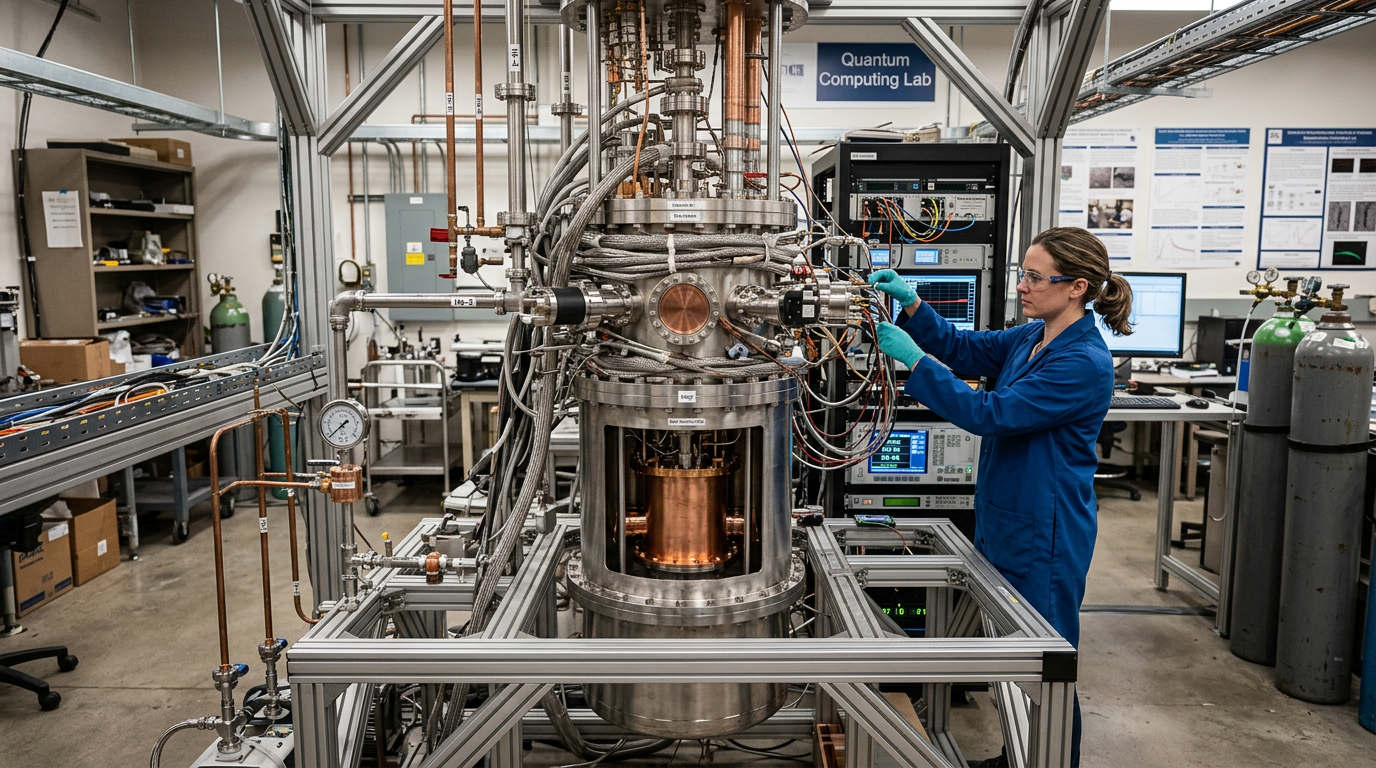
Quantum computing companies often need more than a standard technology-startup insurance package. If your business operates a lab, owns specialized equipment, sells hardware, provides quantum software or cloud services, handles sensitive research, or raises institutional capital, your insurance program may need to reflect those exposures.
There is no universal standalone policy called “quantum computing insurance.” Instead, most companies evaluate a combination of policies based on their operations, assets, contracts, locations, and stage of growth.
Depending on the business, a quantum computing insurance program may include property and equipment coverage, equipment breakdown, general liability, product liability, cyber liability, Technology E&O or professional liability, Directors & Officers (D&O) liability, workers’ compensation, and excess liability coverage. A broker should review the company’s specific equipment, lab operations, customer contracts, data, intellectual property, and financing activity before recommending coverage.
Why quantum companies may need specialized coverage
Quantum companies can combine risks that are not always present in a typical software company.
- Specialized equipment. Some businesses rely on cryogenic systems, lasers, control electronics, optics, shielding, prototypes, and other equipment that can be expensive and difficult to replace.
- Valuable intellectual property. Patents, research, source code, technical methods, and trade secrets may be central to the company’s value.
- Customer and contract obligations. Enterprise customers, universities, research partners, landlords, suppliers, and government counterparties may require proof of specific insurance before signing an agreement.
- Venture financing and governance. Capital-intensive companies with boards, outside investors, or fundraising activity may need to evaluate management-liability risks.
- Cybersecurity. Quantum businesses may hold sensitive research, customer information, credentials, and technical data. Quantum technology also has long-term implications for encryption and post-quantum cybersecurity planning.
What insurance does a quantum computing company need?
The right insurance program depends on the company. The following coverage types are common areas to evaluate. They are not guarantees of coverage, and a policy only responds according to its specific terms, conditions, exclusions, limits, and endorsements.
Commercial property and specialized equipment coverage
This may help cover certain physical loss or damage to scheduled or qualifying equipment, lab contents, build-out, and other business property. Companies should carefully review valuation, covered causes of loss, deductibles, exclusions, and limits.
Equipment breakdown coverage
This may be relevant for certain covered mechanical or electrical failures involving critical systems or equipment. The coverage available varies by policy.
Cargo, inland marine, or transit coverage
This may be important when high-value equipment, prototypes, or components are shipped, transported, installed, or moved between locations.
Commercial general liability
General liability may help with certain third-party bodily-injury or property-damage claims. It is also commonly requested in leases and vendor agreements.
Product liability
Companies that manufacture, ship, install, or sell quantum hardware, components, or other physical products may need to evaluate product-liability exposures.
Directors & Officers liability
D&O insurance may help protect the company and its directors and officers against certain covered management-liability claims. It can be especially relevant for companies with investors, boards, fundraising activity, or significant stakeholder communications.
Technology E&O or professional liability
This may be relevant when a company provides quantum software, quantum-as-a-service access, consulting, research deliverables, algorithms, modeling, integrations, or other customer-facing technology services.
Cyber liability
Cyber insurance may help with certain covered privacy, security, incident-response, extortion, network-interruption, or third-party liability costs. Companies should review how the policy addresses their data, systems, vendors, contractual obligations, and security controls.
IP-related risk solutions
Intellectual-property coverage can be limited and highly policy-specific. Depending on the exposure, a company may evaluate coverage for certain defense costs or other specific IP risks. Insurance does not replace contracts, security controls, employee protections, and a broader legal IP strategy.
Environmental or pollution liability
A company may need to evaluate this area if its operations use cryogens, compressed gases, chemicals, or other materials that create environmental exposures not addressed by standard policies.
Workers’ compensation
Workers’ compensation requirements vary by state, workforce structure, and employer size. Lab-based businesses should also consider workplace-safety practices and applicable regulatory obligations.
Commercial umbrella or excess liability
An umbrella or excess policy may provide additional limits above certain underlying liability policies, subject to its own terms and requirements.
Insurance priorities by business type
Quantum software or algorithms company
Potential areas to evaluate: Technology E&O, cyber, D&O, general liability, and workers’ compensation.
Common triggers: Customer deliverables, data handling, enterprise contracts, venture financing, and professional-service commitments.
Quantum hardware company
Potential areas to evaluate: Property, equipment breakdown, product liability, cargo or transit, cyber, and D&O.
Common triggers: Equipment ownership, prototyping, shipping, installation, manufacturing, and customer-site work.
Quantum research lab
Potential areas to evaluate: Property, equipment breakdown, general liability, workers’ compensation, and environmental or pollution-liability review.
Common triggers: High-value lab equipment, cryogenic or gas use, employee safety, leased premises, and research partnerships.
Quantum-as-a-service provider
Potential areas to evaluate: Technology E&O, cyber, D&O, and contractual-risk review.
Common triggers: Customer access, service commitments, data handling, uptime provisions, and performance obligations.
Quantum-security or post-quantum cryptography provider
Potential areas to evaluate: Technology E&O, cyber, D&O, and contractual-risk review.
Common triggers: Security representations, implementation services, regulated customers, and long-term confidentiality commitments.
Quantum networking or sensing company
Potential areas to evaluate: Property, product liability, Technology E&O, cyber, and cargo or transit.
Common triggers: Hardware deployment, system performance, field testing, customer-site installation, and product sales.
Specialized equipment and lab operations
For a quantum company that operates physical hardware, equipment and facility risk can be a major part of the insurance conversation. Cryogenic systems, lasers, optics, control electronics, shielding, and prototypes may require careful valuation and loss-control planning.
A standard office-property policy may not reflect the replacement value, installation complexity, lead times, or breakdown risks associated with specialized equipment. Property coverage, equipment-breakdown coverage, and transit coverage may need to be reviewed together, especially during installation, relocation, or customer deployment.
Coverage for any particular event depends on the policy. Important items to review include the equipment schedule, valuation basis, covered causes of loss, exclusions, deductible, sublimits, business-income provisions, and waiting periods.
Example: A cooling-system failure damages equipment and delays a customer milestone. The outcome could depend on the equipment schedule, equipment-breakdown wording, business-income coverage, valuation method, waiting period, exclusions, and the facts of the loss.
Lab safety and environmental considerations
Cryogenic liquids and compressed gases can create physical hazards. They can cause cold-contact injuries, pressure-related incidents, and oxygen-deficient atmospheres if gases displace oxygen in enclosed or poorly ventilated areas. This is a safety and operational issue first—not simply an insurance issue.
Companies should work with qualified safety professionals and follow applicable workplace, facility, and equipment requirements. They should also review whether their operations, lease, and insurance policies adequately address potential environmental or pollution exposures.
Intellectual property and cyber risk
Quantum businesses may hold valuable patents, research, algorithms, source code, technical methods, and trade secrets. The risks can include unauthorized access, insider misuse, vendor exposure, contractual disputes, research-data loss, and the cost of investigating a security incident.
Cyber insurance may help with certain covered events, but it does not automatically insure the value of intellectual property or replace an IP-protection program. Companies should consider insurance alongside access controls, encryption, incident-response planning, vendor management, employment agreements, confidentiality protections, and legal counsel.
Post-quantum cyber readiness
Quantum computing has long-term implications for public-key cryptography. One concern is known as “harvest now, decrypt later”: an attacker may collect encrypted information today with the goal of decrypting it later if sufficiently capable quantum computing becomes available.
The practical question is not whether every organization faces an immediate quantum attack. It is whether the information it holds needs to remain confidential for a long time. Research data, trade secrets, sensitive personal information, and certain regulated information may be especially relevant.
In August 2024, the National Institute of Standards and Technology (NIST) released its first three finalized post-quantum cryptography standards: FIPS 203, FIPS 204, and FIPS 205. Companies should consider inventorying their cryptography, identifying long-lived sensitive data, reviewing vendor dependencies, and planning for crypto-agility.
Insurance is only one part of this work. Cybersecurity controls, technical planning, governance, legal review, and clear contract language also matter.
D&O and Technology E&O for quantum companies
D&O insurance may be relevant for venture-backed, capital-intensive, or board-led quantum companies. Fundraising, investor communications, board decisions, hiring, strategic partnerships, and forward-looking statements can create management-liability considerations.
Many institutional investors and boards ask companies to evaluate D&O coverage around a priced financing round. The appropriate timing, limit, retention, and terms depend on the company, the transaction, the board, and investor expectations.
Technology E&O or professional liability may become important when a company delivers services or results to customers. This can include quantum software, cloud access, algorithms, modeling, consulting, research deliverables, integrations, and managed services. The company should compare its customer commitments with the policy’s definition of covered services, exclusions, and contractual-liability provisions.
Insurance requirements in quantum contracts
Insurance needs are often shaped by contracts. Enterprise customers, research partners, universities, landlords, suppliers, government counterparties, and equipment vendors may request proof of insurance before a company can sign an agreement, lease a facility, or begin a project.
Depending on the contract, a company may be asked to carry commercial general liability, cyber liability, Technology E&O, workers’ compensation, commercial auto where applicable, and specific liability limits. Contracts may also request additional-insured status, waiver-of-subrogation language, or a certificate of insurance.
Review insurance clauses before agreeing to them. A contract can require limits, endorsements, or obligations that do not fit the company’s operations or the available insurance market.
What insurers may ask
When evaluating a quantum computing business, insurers may ask questions such as:
- Do you own, lease, or operate quantum hardware, a laboratory, or customer-site equipment?
- What are the replacement values, lead times, maintenance arrangements, and critical dependencies for key equipment?
- Do you manufacture, ship, install, service, or maintain hardware, prototypes, or components?
- Do you provide customer-facing software, cloud access, consulting, research deliverables, or performance commitments?
- What warranties, indemnities, service levels, liability caps, and insurance requirements appear in customer contracts?
- What sensitive research, source code, personal information, customer data, controlled data, or regulated data do you handle?
- What cyber controls protect research data, credentials, endpoints, cloud environments, vendors, and remote access?
- What cryogens, gases, lasers, chemicals, or other potentially hazardous materials are present in the operation?
- What funding stage, board structure, revenue model, international footprint, and investor, landlord, or partner requirements apply?
How to build a quantum insurance program
1. Define the business model.
Identify whether the business is mainly a research lab, hardware company, software provider, cloud platform, security company, or hybrid operation.
2. Inventory assets and dependencies.
Document key equipment, property values, facilities, suppliers, data, intellectual property, and critical people.
3. Review contracts early.
Flag insurance requirements, indemnities, warranties, service levels, limitation-of-liability clauses, and security obligations before signing.
4. Evaluate financing and governance.
Consider board composition, fundraising activity, investor expectations, management-liability exposure, and communications with stakeholders.
5. Review cyber and IP controls.
Align insurance with incident-response planning, access controls, vendor risk, data retention, encryption, and post-quantum readiness.
6. Compare policy wording—not only limits.
Review definitions, exclusions, endorsements, schedules, sublimits, deductibles or retentions, waiting periods, and insurer requirements.
7. Revisit the program as the company grows.
A funding round, new lab, product launch, enterprise customer, international expansion, or move from research to commercialization can change the company’s risk profile.
The bottom line
Quantum computing companies can combine specialized equipment, lab operations, intellectual property, customer commitments, sensitive data, and venture-scale governance. No single policy is designed to address every exposure.
A tailored program may bring together property and equipment coverage, liability policies, D&O, Technology E&O, cyber, workers’ compensation, and other solutions based on the company’s actual operations and contracts. The objective is to identify potential gaps before they interfere with a funding round, lab lease, equipment deployment, enterprise contract, or response to a loss.
Talk with Fullsteam
Building in quantum? Tell a Fullsteam advisor whether you operate hardware, algorithms, cloud services, research facilities, or a hybrid model—and where your equipment, contracts, people, data, and IP create risk.
A Fullsteam advisor can help you evaluate the insurance categories relevant to your business and coordinate a program designed around your stage of growth.
Talk to a Fullsteam advisor about quantum computing insurance




management specialist